



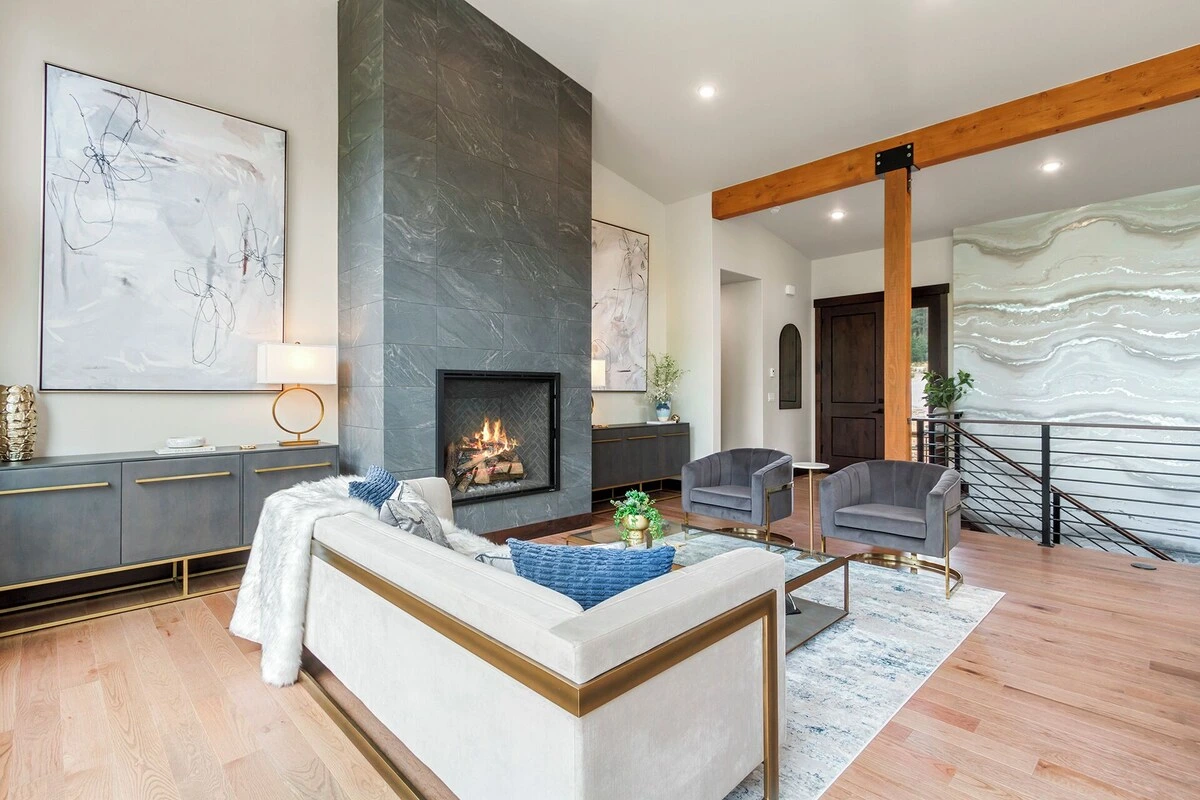
Walk into a room that immediately feels inviting, balanced, and professionally designed, and there’s a good chance the rule of thirds is working behind the scenes.
Although this principle is widely known in photography and art, professional interior designers and home stagers also rely on it to create spaces that feel visually comfortable and intentionally arranged.
Whether you’re decorating a new home, renovating a room, or preparing a property for sale, understanding the rule of thirds can help you make smarter design decisions without spending more money.
In this guide, you’ll learn exactly what the rule of thirds is, why it works, and how to apply it in every room of your home.
What Is the Rule of Thirds in Home Design?
The rule of thirds in home design is a visual composition technique that divides a space into three equal sections, either horizontally or vertically. Designers use these imaginary divisions to create balance, proportion, and visual interest.
Rather than placing every object in the exact centre of a room, the rule encourages arranging furniture, artwork, lighting, and décor so the eye naturally moves throughout the space.
The result is a room that feels:
- Balanced
- Comfortable
- Spacious
- Professionally designed
- More visually engaging
Instead of perfect symmetry, the rule of thirds creates a natural flow that feels more realistic and welcoming.
Why Does the Rule of Thirds Work?
Human eyes naturally seek balance.
When every object competes for attention or everything is perfectly centred, a room can feel flat or awkward.
Using thirds creates subtle visual hierarchy. One element becomes the focal point while supporting elements complement it rather than compete with it.
Professional home stagers use this principle because it helps buyers imagine themselves living in the space instead of being distracted by poor furniture placement or clutter.
Understanding the 2:1 Visual Ratio
One of the easiest ways to apply the rule of thirds is through the 2:1 proportion.
Instead of splitting visual weight evenly, designers often allocate:
- Two-thirds to the dominant element
- One-third to supporting elements
Examples include:
- A large sofa balanced with a smaller accent chair
- A substantial artwork paired with a slimmer floor lamp
- A statement rug complemented by minimal accessories
This creates contrast without overwhelming the room.
How to Apply the Rule of Thirds in Every Room
Living Room
The living room usually has the largest visual elements, making it the easiest place to use this principle.
Instead of placing every piece against the walls, consider creating intentional groupings.
For example:
- A sectional sofa occupies roughly two-thirds of the seating area.
- Accent chairs and side tables complete the remaining third.
- Artwork is positioned slightly off-centre rather than directly above every piece of furniture.
The room immediately feels more dynamic.
Bedroom
Bedrooms benefit from balanced focal points.
Your bed naturally becomes the largest visual element.
Instead of decorating both sides identically, introduce subtle variation through:
- Different-sized decorative objects
- Layered bedding
- Asymmetrical lighting
- Artwork positioned using thirds rather than perfect symmetry
This creates a luxurious, designer-inspired appearance.
Dining Room
The dining table should dominate the visual space without overwhelming it.
Use lighting fixtures that occupy approximately one-third of the ceiling space above the table, allowing surrounding décor to remain understated.
Simple centrepieces often work better than oversized floral arrangements because they maintain visual balance.
Kitchen
The rule of thirds applies surprisingly well in kitchens.
Consider balancing:
- Open shelving with closed cabinetry
- Decorative accessories with functional appliances
- Statement lighting with clean countertops
Avoid filling every surface.
Negative space is an important part of good design.
Home Office
Productive workspaces feel organised because visual clutter is controlled.
Position:
- Your desk as the primary feature
- Storage on one side
- Decorative elements sparingly throughout the remaining space
This prevents the room from feeling cramped.
The Rule of Thirds in Home Staging
If you’re selling your home, the rule of thirds becomes even more valuable.
Professional home stagers use it to help buyers focus on the property’s strengths.
Examples include:
- Positioning furniture to highlight room size.
- Creating conversation areas.
- Making windows appear larger.
- Drawing attention to fireplaces or architectural details.
- Improving the perceived flow between spaces.
Well-balanced rooms photograph better, attract more online attention, and often leave stronger impressions during showings.
Common Mistakes to Avoid
Many homeowners unintentionally create visual imbalance.
Some of the most common mistakes include:
Placing Everything Against the Walls
This often makes rooms feel disconnected rather than spacious.
Using Furniture That’s Too Large
Oversized furniture overwhelms the available space and disrupts proportion.
Decorating Every Surface
Too many decorative objects compete for attention and create visual noise.
Perfect Symmetry Everywhere
Although symmetry has its place, using it throughout the entire home can make interiors feel predictable.
Introducing subtle asymmetry creates warmth and authenticity.
Does the Rule of Thirds Work in Small Rooms?
Absolutely.
In fact, smaller spaces often benefit the most.
Using balanced proportions prevents rooms from feeling overcrowded.
Instead of adding more furniture, designers carefully select fewer pieces with better scale and positioning.
The room appears larger because the eye can move naturally through the space.
Can You Break the Rule of Thirds?
Yes.
Like every design principle, the rule of thirds is a guideline rather than a strict rule.
Experienced designers intentionally break it when creating dramatic interiors or highlighting unique architectural features.
However, understanding the principle first makes those creative decisions more effective.
Professional Tips for Applying the Rule of Thirds
When styling your home, keep these practical guidelines in mind:
- Choose one clear focal point for every room.
- Let larger furniture occupy roughly two-thirds of the visual weight.
- Leave intentional empty space to avoid clutter.
- Vary heights using lamps, artwork, plants, and shelving.
- Step back regularly to evaluate balance from different viewpoints.
- Consider how the room appears in photographs as well as in person.
Small adjustments often create the biggest visual improvements.
Why Interior Designers and Home Stagers Rely on This Principle
Professional designers rarely arrange rooms randomly.
The rule of thirds helps them:
- Improve visual flow
- Make rooms appear larger
- Highlight architectural features
- Reduce visual clutter
- Create inviting spaces
- Increase buyer appeal during home sales
Because it is based on how people naturally process visual information, the principle remains effective across traditional, modern, minimalist, transitional, and contemporary interiors.
Frequently Asked Questions
What is the rule of thirds in home design?
The rule of thirds is a design principle that divides a room into three equal sections, helping designers arrange furniture and décor to create balance, visual interest, and a natural flow.
Is the rule of thirds only used by interior designers?
No. Homeowners, decorators, DIY enthusiasts, photographers, and professional home stagers all use the rule of thirds to create more appealing spaces.
Does the rule of thirds make a room look bigger?
Yes. Proper furniture placement and balanced visual weight often make rooms feel more open and spacious, particularly in smaller homes.
Can I use the rule of thirds when staging a home for sale?
Absolutely. Professional home staging frequently incorporates the rule of thirds to emphasise space, improve photography, and help buyers emotionally connect with the property.
Is symmetry better than the rule of thirds?
Neither is universally better. Symmetry creates a formal appearance, while the rule of thirds often produces interiors that feel more natural, relaxed, and visually engaging.
Final Thoughts
The rule of thirds in home design is one of the simplest yet most effective ways to improve any interior. By thoughtfully balancing furniture, décor, and open space, you can create rooms that feel comfortable, functional, and visually appealing.
Whether you’re refreshing your home, preparing for a renovation, or staging a property to attract buyers, this timeless design principle helps every space look more intentional. Start with one room, identify its focal point, and arrange the surrounding elements using balanced proportions. Small changes can make a noticeable difference in how your home looks and feels.